The Power of Personalized Therapy in Texas
In a state as dynamic and diverse as Texas, no two people’s life experiences are the same. Whether you’re an artist navigating creative pressures or a professional balancing the demands of a fast-paced industry, your mental health journey is unique. That’s where personalized therapy comes in. Unlike a one-size-fits-all approach, personalized therapy is designed to meet you where you are, tailoring therapeutic techniques to your individual needs, goals, and life circumstances. In these blogs, we’ll explore why personalized therapy is essential for effective mental health care in Texas and how it can help you achieve meaningful, lasting change.

Yoga for Wellness
By Allison L. Smith, M.Ed., LPC-S, RPT-S, NCC
https://www.ourlivescounseling.com/blog
Have you been curious about yoga or wanting to get back into your yoga practice after a break? So many of us are interested, but struggle to make time to practice. We are so busy with our day-to-day activities of going to work and caring for our families that we sometimes just don’t make time for our own self-care.
The practice of yoga doesn’t have to be a huge carve out of our day. We can set just a few minutes aside to do a little bit and that can go a long way in helping us regulate our body, mind, and spirit. That 5–10 minutes of yoga a day can become a grounding anchor in our life and a consistent way to check in with ourselves, reset, and reconnect.
Yoga has a unique way of “righting” us, not by forcing change, but by gently bringing our body, mind, and inner life back into alignment. For most of us our day pulls us outward toward tasks, screens, and responsibilities. Yoga is a practice that returns us to inward awareness, and as we start to practice regularly, we become better able to notice tension, emotions, and stress signals early. Many of us experience a sense of grounding and clarity after a session.
There are so many benefits to practicing yoga. Some of the most amazing qualities is how it helps us focus our attention, ease our anxiety, and even balance our body chemistry. We start to train our system through experience. Over time, it helps us reshape how we respond to stress and how our body regulates to maintain its balance.
My favorite online supports are Yoga with Adriene and David Swenson’s Ashtanga Yoga Productions. There are so many online and in-person opportunities for us to explore. Oftentimes, yoga classes can be found at our local recreation centers or in private studios. There are free YouTube sessions and even live online sessions we can join. There are even books, such as American Yoga Association Beginner’s Manual, Hatha Yoga Illustrated, and The Yoga Bible.
Best wishes to you. Getting on the mat can offer us life-changing benefits, and Our Lives Counseling wants to support you in your practice. We look forward to encouraging you and helping you set up a successful and sustainable life routine that includes a daily yoga practice.
#yoga



Mindfulness
By Allison L. Smith, M.Ed., LPC-S, RPT-S, NCC
Is your mind full of chatter and distractions that you don’t know how to wrangle? So many of us say that we are overwhelmed with thoughts, and we struggle to quiet our minds. This can be very frustrating, especially when we want to rest and find some peace. The good news is that we can learn how to manage the barrage of thoughts that consume us.
First things first, we must decide that we are willing to move away from working on every thought that comes into our mind. Many of us feel like we are supposed to do just that; if a thought appears in our mind, we think it is important and deserves our immediate attention. This can be very distracting in nature. We find ourselves working on thoughts when we are supposed to be doing something else. We want to sleep, but can’t get away from thoughts that are demanding our attention for example. Giving our attention to the whim of thoughts that parade through our mind has us frazzled and unfocused, not finishing tasks or becoming sidetracked in conversations.
In the teachings of mindfulness, we learn how to calm the mind. The breath is what we are taught to watch, to focus on. Now, all of those thoughts that have stolen our attention for far too long are to be addressed as merely thoughts, one no more important than the next one to pass through our mind. Those thoughts more often than not are that of the past or future and are not useful when we are trying to calm ourselves. Returning to the breath directs our attention to the present moment, the here and now and this is where we can find peace of mind.
The act of watching breath is fairly simple. It is the choice to actually take the time to do it that many of us struggle with. Life has many of us always on the go. We chase after goals and set dense schedules focused on accomplishments and tasks of achievement. Slowing down to watch breath can feel like a waste of time. So it is important to really look at how much time this practice really takes out of our day.
There is no set time requirement for practicing mindfulness in fact. If we just have a minute here and there, taking that time to slow down and focus on the breath is sometimes just enough to help us better manage our day moving forward. The Venerable Bhikkhu Pannakara, leader of Walk for Peace USA, suggested that even just taking one minute every hour to watch breath can be very helpful to our overall peace of mind.
There are many ways to be mindful. Watching breath, noticing heartbeat, and guided meditations are some of the ways in which we can practice. Tara Brach, a psychologist and spiritual leader, leads a guided meditation every Wednesday, which can be found on several social media sites and on her website. Being a part of a mindful community can be helpful to those who struggle to take the time by themselves or prefer to be immersed in community. There are communities that welcome visitors into their daily meditation spaces, such the Bảo Tháp Dhammacetiya Temple in Fort Worth, Texas where the Walk for Peace USA monks began their trek to Washington, DC in early 2026.
There is a very simple and short instruction video that teaches the technique of watching breath in a simple way: How to Meditate - Watching the Breath. I find this clip very easy to understand and helpful in affirming that this practice of watching breath is as simple as it seems. I started by simply trying this technique for three minutes each day. I would set a timer for myself and watch breath every time I remembered to. I was amazed at how often my chattering mind stole my attention away from the task. Fortunately, as I practiced more and more, this distraction became less of mindless transitions off task and more of a monitored and recognized action, which I could better manage.
If you would like support for learning to calm your mind and becoming more focused and intentional with how you use your mind, reach out to Our Lives Counseling at www.ourlivescounseling.com.




Journaling for Wellness
By Allison L. Smith, M.Ed., LPC-S, RPT-S, NCC
03/25/2026
Do you find yourself in and out of a routine of journaling? Many of us have tried at times in our lives to keep a journal. When we are young, the appeal of a locked “diary” draws some of us in, but oftentimes I hear stories of how the lock was broken by someone and the secrets we hoped to keep were discovered. This can be devastating at times. When that happens, many of us stop writing and lock everything up in our minds never to see the light of day again.
To Keep or Not to Keep, That is the Question
What can we do moving forward to reclaim the very well behavior of journaling, while protecting our privacy? Thankfully, “keeping” the journal writing so it can be reflected upon later is not what makes journaling a healthy experience. Folks like Julia Cameron, writer of The Artist’s Way and Phil Stutz, writer of The Tools, explain that the art of putting pencil to paper in self-expression is the “well” part of journaling. They both say that we can absolutely destroy the page once we have written the journal entry. They note that keeping the entry is a personal choice, but not part of the benefit in journaling.
Creative Rituals
I have spoken to many people who express the desire to destroy the journal entry immediately after writing it. They have shared ideas for just how to do this. Many people share about even creating a kind of ritual around the event. For example, some burn the page in a sort of ceremonial way, such as in their backyard fire pit or inside a fireplace. Others say they simply rip the page into tiny pieces and throw it away. One of the most interesting and creative ideas I have heard was that one person chose to rip the paper up and then soak the pieces in water. Once the paper was wet, they then pressed the pieces into a new recycled page, that they then wrote more journal entries on.
As You Wish, To Each is Own
What ideas might you come up with if you are someone who wants to protect your privacy or someone who wants to practice non-attachment? As for me, I have been keeping journals since I was in the 8th grade. I have volumes at this point. Sometimes I read back through the pages and notice how much I have grown and how my perspective has changed through the years. I’m sure whomever finds them some day will be shocked and surprised and somewhat confused by all the things I put to paper.
The Act of Wellness
Most importantly, remember it is the act of writing that heals, helps us know ourselves, or clears the clutter of our mind. Try it for yourself. What you do with the result of journaling, is as you wish. Working with a counselor to develop a safe and healthy plan for ways to journal can be very helpful. Reach out to Our Lives Counseling at www.ourlivescounseling.com if you would like support with this. Happy journaling!
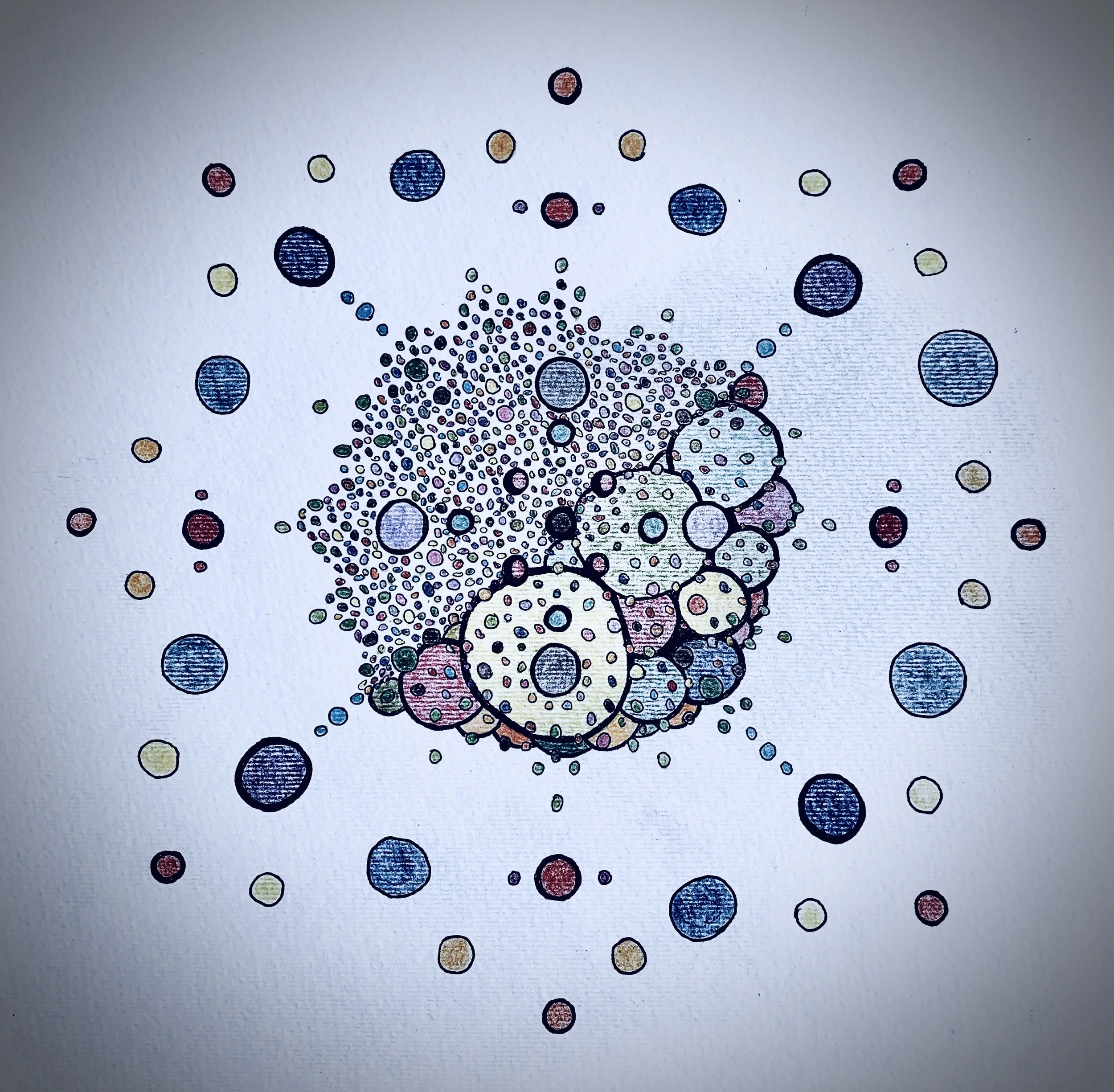
Bubble Mandala by Allison Smith
Mandala Making
By Allison L. Smith, M.Ed., LPC-S, RPT-S, NCC
03/24/2026
Expressing through mandala making is so much more than relaxing. Mandalas are an ancient art form. Cultures throughout the world have found them to be helpful to a person’s sense of well-being. The word "mandala" originates from Sanskrit, meaning "circle" or "center", and the creation of them has been considered by many an expression of inner order emerging from the chaos of our unconscious. Mandalas can at times even contribute to our own personal healing and transformation, through a structured approach that incorporates active imagination and symbolic expression.
To begin, prepare a creative space, find some paper and drawing/painting supplies. Then, place a mark in the middle of your page (ex. Dot or Shape). Build from the center outward, adding shapes, lines, and/or symbols that come to your imagination. You can repeat patterns or remain free-flowing as you go around the paper. There is no wrong or right way; no judgement or interpretation is needed while creating a mandala. There is no official stopping point. You can finish when you sense “enough”, when you feel naturally settled, or just because you want to stop. Mandalas are at times messy, uneven, and even chaotic in design. The process is about discovery and expression, not perfection.
If you would like to learn about expressive arts that can support your mental health and well-being, reach out to Our Lives Counseling at www.ourlivescounseling.com. We encourage creativity that supports personal growth and well-being.



Functional Planning
By Allison L. Smith, M.Ed., LPC-S, RPT-S, NCC
03/23/2026
Do you struggle to keep yourself organized and productive? I have found that keeping a functional planner is so helpful. Many years ago I had an opportunity to take a Franklin Planner training course, where I learned to use a planner well. This was a real game changer.
Getting Organized
Staying focused on our goals can be difficult. Our lives are so busy with day-to-day expectations, and we are pulled in many directions. Sometimes it is difficult to find time to sit down and really reflect on how our life is going. Getting organized and intentional with this precious time is very helpful.
Values and Roles
Taking time to really look at our values system and the roles we play can help us make plans that truly fulfill us. The Franklin Planner system, as one great example of functional planning, encourages us to explore our values and roles. Becoming clear about those aspects of our lives, helps us incorporate them into a personal life mission statement.
Goal Planning
Once we become more clear about our mission in life, we can then start to develop smart goals that are clearly defined and focused on what truly matters to us. A planner can help us manage all of the tasks we need to complete on our way to achieving our goals. Having one place to log our long-term, mid-range, and short-term goals is a great way to see progress over time.
Accomplishment
Counseling support can help us stay focused as we learn to use a planner consistently. With a counselor, we can explore our interests and come to clarify our value system. Together, we can write realistic and achievable goals and set intentional tasks in our plans for accomplishment.




The Mental Health Benefits of Exercise
By: Favi Sanchez De Nova, Social Work Intern
11/26/2025
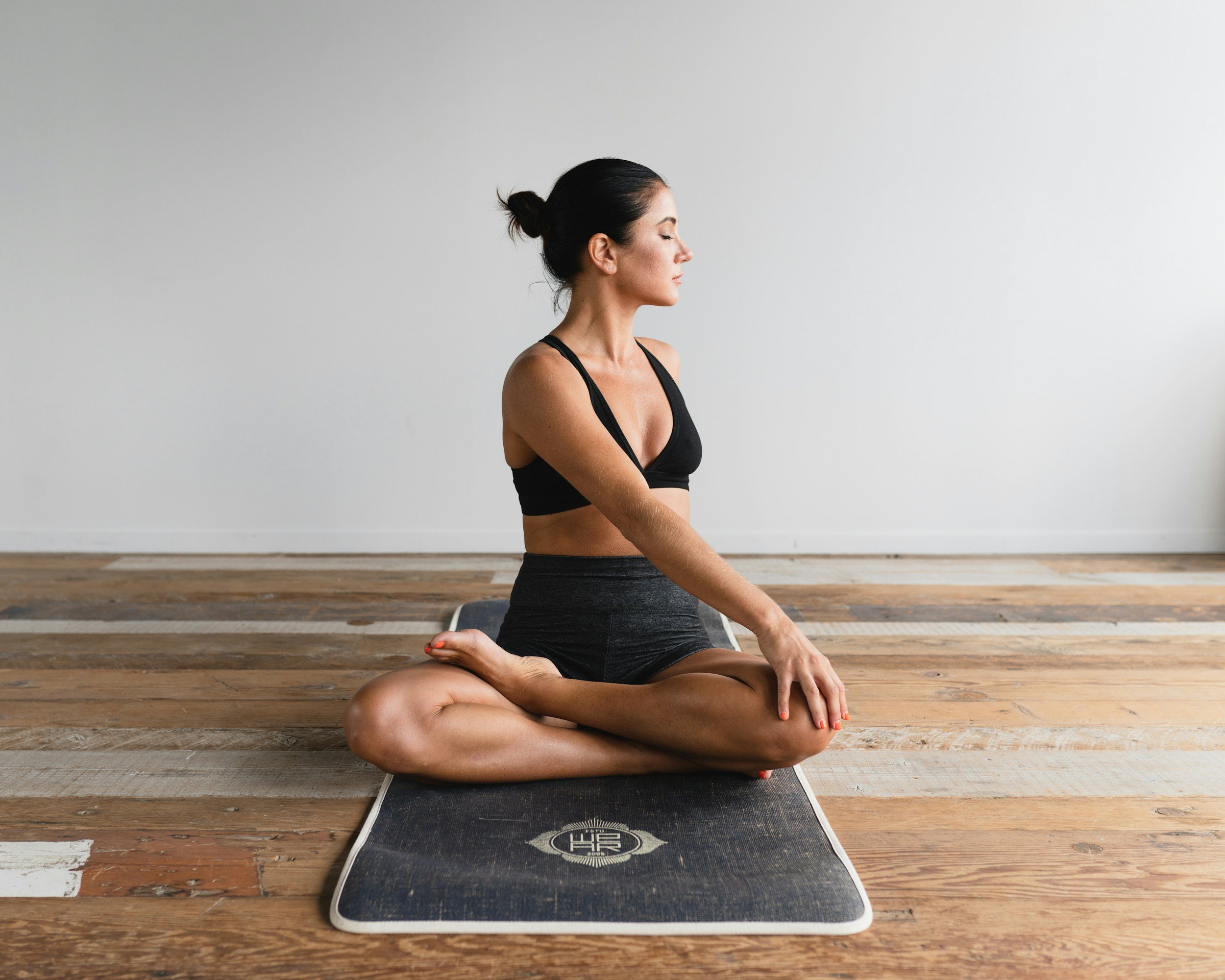
When most of us think about working out, our minds instantly go to the physical results: weight loss, muscle gain, or getting that “toned” look. But movement offers way more than what we see in the mirror. Exercise also plays a powerful role in supporting our mental health. From boosting mood to reducing stress and improving confidence, even small amounts of movement can make a big difference.
A Natural Mood Booster
You don’t need a high-intensity workout to feel the mental benefits of exercise. A short walk, a light stretch, or a few minutes of movement can shift your mood and help make your day feel a little brighter. Exercise helps release endorphins, the brain’s “feel-good” chemicals, which naturally improve our mood and energy levels. Short workouts matter! Think of them as quick resets for your mind and body. Even a 10-minute walk can help clear your head and give you that extra push to keep going.
Relief from Stress
Let’s be real, guys … life can get stressful. Exercise gives us a healthy way to release that built-up tension and lower cortisol, our body’s main stress hormone. Personally, stepping into the gym feels like hitting a reset button. No matter how rough my day has been, I always walk out feeling better than when I came in. I never regret working out, but I always regret skipping one.
Better Sleep and Focus
Ever notice how much easier it is to think clearly after moving your body? Whether you’re studying, working, or problem-solving, regular exercise can help you focus and manage your energy more effectively. It can also lead to deeper, more restful sleep, something we all need to show up fully in other parts of our lives.
Building Confidence
One of my favorite things about working out is seeing progress, big or small. Maybe it’s lifting a little more weight, sticking to a routine, or simply showing up on a tough day. These small wins are worth celebrating. Each accomplishment builds confidence and reminds us that we’re capable of more than we think.
Social Support and Connection
Exercise doesn’t have to be a solo mission. Walking with a friend, joining a class, or being part of a team adds a layer of connection and accountability. Having people who share your goals can make the process more enjoyable and fulfilling. Social support is a key part of mental wellness. It helps us feel seen, supported, and motivated.
Final Thoughts
Exercise is more than just a way to stay fit, it’s a form of self-care that supports both your mind and body. Whether you’re doing a 10-minute walk, dancing in your living room, or lifting weights, movement can help you reset, recharge, and reconnect with yourself.
So next time you’re feeling overwhelmed or unmotivated, remember to just start with one small movement. Your body (and your mind) will thank you for it.

Overcoming Trauma Through Individual Therapy: A Safe Space for Healing
Trauma can have a lasting impact on your mental health, but individual therapy offers a path to healing in a safe, supportive environment. This blog explores how affirming therapy provides a secure space for processing trauma, building resilience, and reclaiming your sense of self.

How Individual Therapy Can Help You Navigate Life’s Challenges
Life’s challenges, such as career changes, relationship issues, and personal growth, can feel overwhelming. Individual therapy offers personalized support to help you manage these transitions, providing tools and strategies to navigate difficult moments with confidence and clarity. Discover how therapy can guide you through life’s ups and downs.

Exploring the Benefits of Virtual Individual Therapy in Texas
Discover the convenience and accessibility of virtual individual therapy for residents across Texas. Virtual therapy offers flexible, effective mental health support, allowing you to prioritize your well-being from the comfort of your home. Learn how virtual sessions compare to in-person therapy and why they might be the right choice for your mental health journey.

Why Individual Therapy is Essential for Mental Health in Austin
Living in a vibrant city like Austin, Texas, comes with unique challenges that can impact your mental health. From managing stress and anxiety to navigating life transitions, individual therapy offers personalized support to help you thrive. Discover why individual therapy is essential for maintaining mental well-being in Austin and how it can help you overcome the pressures of city life.